On 7 October 2026, Gauteng Women in Insurance (GWII) hosted its third Leaderwalk session of the year at Deneys in Sandton, bringing together women from across the financial services industry for a conversation on ethical leadership, integrity, accountability and the courage to do what is right when it matters most.
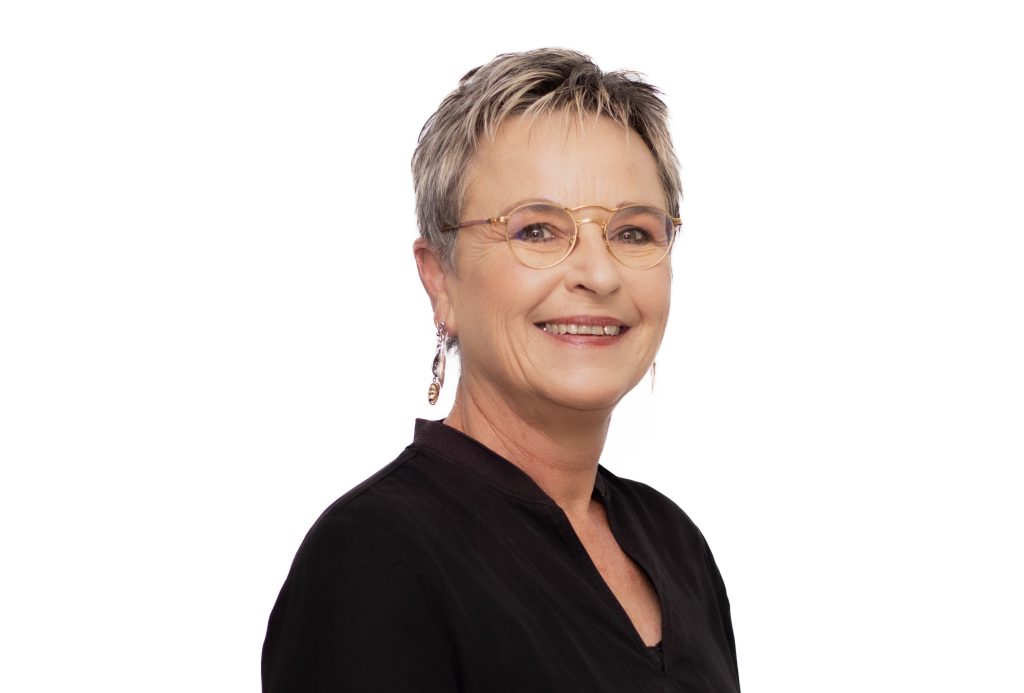
Under the theme “She Leads: The Courage to Lead Ethically When It Matters Most”, the session featured Dr Liezl Groenewald, Chief Executive Officer of The Ethics Institute (TEI), who explored the role of ethics in leadership and the responsibility leaders have to influence the cultures and organisations around them.
With declining institutional trust, ongoing concerns around corruption, rapid technological change and increasing expectations from employees, customers and other stakeholders, ethical leadership is becoming an increasingly important part of the leadership conversation.
Beyond compliance
For Groenewald, ethical leadership goes beyond simply following rules and policies. “Ethical leadership, to me, starts where compliance ends. Compliance asks: What am I required to do? What do the law, the policy or the governance framework expect of me? Ethics asks a more demanding question: What is the right thing to do?”
An organisation can be technically compliant and still behave in ways that are unfair, disrespectful, irresponsible or harmful.
“Ethical leadership therefore requires leaders to consider not only whether a decision is permissible, but also its impact on people, stakeholders and society. It requires judgement, fairness, integrity, accountability and, importantly, consistency between what leaders say and what they actually do.”
She describes compliance and ethics as partners, with compliance providing boundaries and controls, while ethics provides the values and judgement needed when rules are silent, ambiguous or inadequate.
“That is ultimately where ethical leadership becomes visible: not in the values displayed on the wall, but in the choices leaders make when nobody can force them to do the right thing.”
When doing the right thing comes at a cost
Ethical courage is often tested when doing the right thing has consequences. “Ethical courage is rarely tested when the right decision is easy. It is tested when doing the right thing has consequences.”
These moments can include challenging a powerful colleague, reporting misconduct, disclosing bad news to a board, protecting an employee who has spoken up or refusing an opportunity because of how it was obtained.
“The difficult part is that unethical decisions seldom arrive labelled ‘unethical’. They often arrive disguised as commercial pressure, loyalty, urgency, or organisational survival.”
For Groenewald, courage is not about being free from fear or consequences. “Courage is not the absence of fear or consequences. It is the willingness to act according to your values despite them.”
She suggests leaders ask themselves: “What am I prepared to lose in order to remain true to what I say I stand for?”
Creating cultures where people can speak up
Ethical leadership is also reflected in the environment leaders create for their employees.“A speak-up culture is not created by installing a hotline. It is created by what happens after someone speaks.”
Employees watch what happens to people who challenge decisions or report misconduct. Leaders therefore need to actively invite challenge, listen without becoming defensive, protect confidentiality and prevent retaliation.
Among the warning signs of an unhealthy speak-up culture are fear of challenging senior people, retaliation against people who raise concerns and employees saying, “There is no point reporting because nothing will happen”.
“I would be particularly concerned about an organisation in which senior leadership proudly tells me, ‘We receive almost no whistleblowing reports.’ That may indicate an exceptionally ethical organisation – but it may equally indicate an organisation in which people have stopped speaking.”
Women and ethical leadership
As part of GWII’s broader “She Leads” theme, Groenewald also considered how women can use their positions and influence to shape the institutions they lead. “Representation therefore matters enormously, but representation alone is not transformation.”
She encourages women leaders to consider how they use their influence: “Whose voices am I bringing into the room? What behaviour am I challenging? What am I normalising? Who am I creating opportunities for?”
Women should also not feel that ethical leadership requires them to be agreeable, accommodating or endlessly diplomatic. “Ethical leadership sometimes requires respectful disruption.”
For Groenewald, “She Leads” should mean more than occupying a leadership position. “It should mean that she uses that position consciously to leave the institution more ethical, more inclusive and more humane than she found it.”
Power and accountability
Leadership inevitably comes with power and influence, making accountability central to ethical leadership.
“Responsible leaders understand that leadership power is entrusted to them; it is not an entitlement. They therefore exercise it with restraint, fairness, transparency and accountability.”
When something goes wrong, Groenewald says ethical leadership requires leaders to acknowledge what happened, establish the facts, accept appropriate responsibility, remedy the harm, learn from it and take steps to prevent recurrence.
“Saying ‘I got this wrong’ does not necessarily diminish leadership authority. In many circumstances, it strengthens credibility.” She adds: “The greater our power, the greater our obligation to account for how we use it.”
Ethics in a changing technological landscape
Artificial intelligence is creating new opportunities, but also new ethical challenges for leaders. “AI introduces extraordinary opportunities, but it also introduces a fundamental leadership challenge, namely, organisations can now make consequential decisions at a scale and speed that may exceed our capacity to scrutinise them ethically.”
In financial services, technology can influence decisions about credit, insurance, fraud detection, employment, investment, customer profiling and access to services. “If an algorithm makes or informs a decision that unfairly disadvantages someone, we cannot simply say, ‘The system made the decision.’ Accountability ultimately remains human.”
Groenewald encourages leaders to ask five questions when implementing AI: “Is it lawful? Is it fair? Can we explain the decision? Who could be harmed? And who remains accountable?”
“There is also a danger of treating AI governance as primarily an IT responsibility. It is not. It is a governance and leadership responsibility.”
From conversation to action
The Leaderwalk provided attendees with an opportunity to reflect on the responsibilities that come with leadership and the role individuals can play in shaping ethical organisational cultures.
It also provided an opportunity for attendees to engage with the topic through the keynote, Q&A and breakaway sessions, allowing participants to reflect on their own leadership experiences and consider how ethical leadership can be strengthened within their organisations.
We thank our facilitators for accepting our challenge to facilitate discussions:
- Ian Thompson (Q LINK Holdings)
- Lizelle van der Merwe (FIA – Financial Intermediaries Association of Southern Africa)
- Marissa Damons (C. Steinweg Bridge)
- Nicci Britton (Deneys)
- Pamela Taukobong (ABSA Group)
- Zunaid Patel (Digicall Group)
A word of thanks
GWII extends its appreciation to Dr Liezl Groenewald for sharing her expertise and facilitating an important conversation around ethical leadership, courage and accountability.
A special thank you also goes to the main sponsor, Deneys; table sponsors Absa, Sinergi Risk and Qlink; Glasfit, our photography sponsor; and logistical sponsors FAnews and Santam Specialist Solutions, for their support in making the Leaderwalk possible.
GWII also thanks everyone who attended and contributed to the conversation, helping to create a space for meaningful engagement around what it means to lead with integrity and courage.
#GWII #SheLeads #ConnectLeadInspire